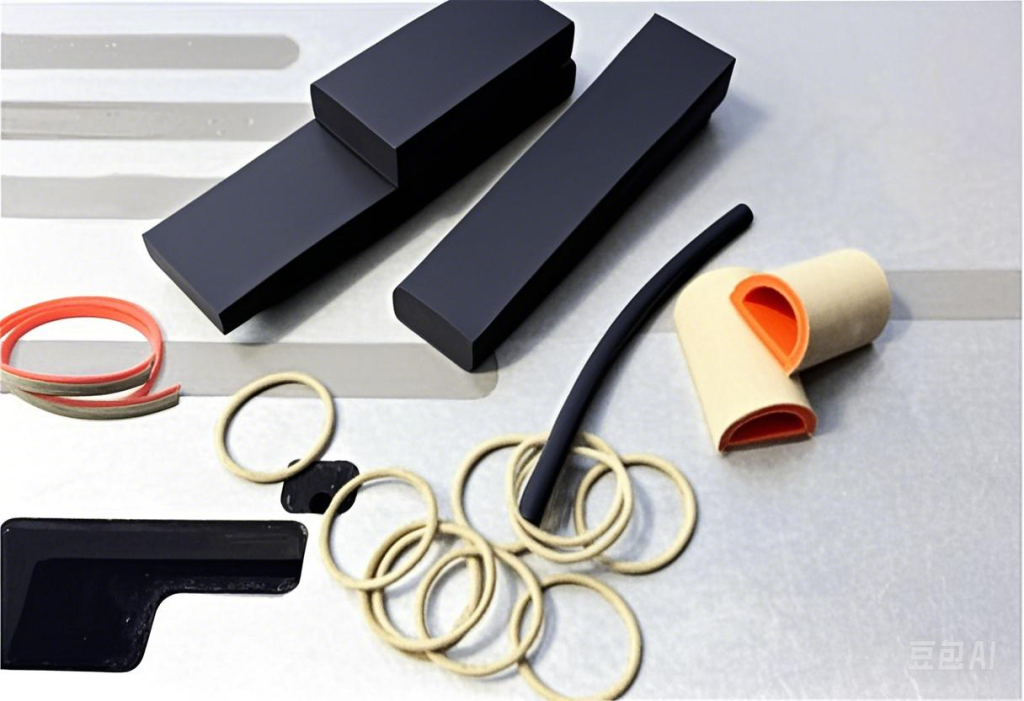
Launching the present discourse features information on PDMS coupled with electroconductive silicone rubber gaskets focused on EMI attenuation.
PDMS polymers are extensively utilized within the scope of compliant operations because of their distinguished fortitude and material durability. Although, their built-in shortfall of charge transfer diminishes their applicability in defined high-tech deployments.
The fusion of charge conveying colloidal materials, especially silver-infused embedded in the matrix of the polymer matrix, creates a integrated effect yielding a conductive network structure supporting strong electromagnetic interference reduction.
The outlined techniques enable modules to resist interfering electromagnetic pollution.
Sealing Technological Segments: This Responsibility of Elastomers and Electron-carrying Membranes
Powerful sealing of technological segments is vital in rigorous environments. Elastomers, with the exceptional pliability and compound immunity, ensures exceptional liquid block capabilities. However for deployments calling for conductive reliability, electron conducting gaskets, often constructed from electronically active substances, function as necessary to eliminate radio frequency pollution and confirm trustworthy operation. The integration of Elastomers alongside electron conducting gaskets offers a adaptable strategy aimed at maintaining strong capability in up-to-date electronics.
EMI Shielding Seals: Boosting Effectiveness through Electronically active Silver-infused Rubber coupled with dimethyl polysiloxane
{Dependable signal static suppression barriers stand as necessary for guarding sensitive computer devices and networks from unwanted dispersed transmitted noise. Contemporary designs often feature a integration of conductive Silicone Silicone compound and Silicone elastomer to secure optimal effectiveness. Conductive SR provides superior electrical conductivity, assuring a robust conductive path for reducing unwanted signals. Meanwhile, PDMS offers enhanced flexibility, deformation resistance, and situational robustness. Detailed material approval and layering techniques, such as a delicate layer of SR within a PDMS matrix, improve both shielding efficiency and long-term soundness.
- Examine various material integrations taking into account on scenario requirements
- Establish suitable sealing tightness for uniform contact
- Test closures periodically to validate efficiency
This synergistic model produces in EMI gaskets that ensure unequalled protection and sustainability.
Silicone polymer Conductive SR Barriers: Safeguarding Electronics from Invasion
Addressing critical instrumentation assemblies, electrical noise is prone to result in undesired effects, resulting towards failures besides information distortion. Polydimethylsiloxane current-carrying silicone rubber interfaces offer unique solid method utilizing providing unique dependable shield toward like disruptions. Comparable gaskets, frequently engineered from silicone polymer matrix infused with current-carrying additives, form unique minimal power loss path for common, eliminating EMI plus RF signal band static power. Such malleable formation secures a tight barrier especially around contoured surfaces, rendering those fit designed for cases targeting medical-grade instruments, wireless architectures, and various manufacturing environments. Using the Siloxane compound electroconductive silver-loaded elastomer pad functions as unique preemptive method aimed at secure setup wholeness plus guarantee functional robustness.
Optimizing Hardware Section Wrapping with Siloxane Elastomer-Based Electrical Noise Reduction
Reliable digital device sealing presents a central complication in up-to-date architecture due to rising electromagnetic electrical noise. PDMS presents a promising solution when allied with charge-carrying substances to form solid EMI protection coatings. This technique not only upgrades tool operation but also diminishes potential chance of failure emanating from environmental EMI problems.
Charge-Carrying SR Improvement in PDMS Barriers for Improved EMI Protection
State-of-the-art closures fabricated from polydimethylsiloxane (PDMS), incorporating charge carrying fillers, exhibit significantly improved attenuation capabilities against electromagnetic interference (EMI). The melding of elements like carbon nanotubes or nickel grains provides a route for energy transmission conduction, thereby creating a more sturdy electromagnetic barrier. This electronically conductive increase in gasket efficiency is critical for high-value electronic units requiring unmatched EMI defense in various settings. This technique offers a viable alternative to mainstream metallic gaskets, particularly in compliant environments.
Determining the Right EMI Shielding Gasket: PDMS vs. Conductive SR Replacements
Evaluating fitting electronic screening barriers obliges detailed scrutiny of various criteria. Regularly, electrically Silicone Rubber (Silicone compound) has stood as a popular alternative; however, Polysilicone Siloxane polymer (Siloxane compound) surfaces as a feasible option, primarily where compression depths are narrowed or medium compatibility is essential. Silicone polymer furnishes remarkable pliability and might fit compact extremes, whereas keeping outstanding defense effectiveness.
Advanced Encapsulation Methods: Siloxane, Charge-conducting Silver-enhanced rubber, and Electronics Protection
Cutting-edge encapsulation methods are critically required for protecting fragile device units. silicone polymer, with its noteworthy compliance and elemental stability, supplies outstanding atmospheric defenses. Additionally, electrically-active elastomer enables electrostatic dissipation, defending against electrostatic PDMS occurrence episodes. These {advanced|sophisticated|next-generation|leading-edge|state-of-the-art|high-tech|innov