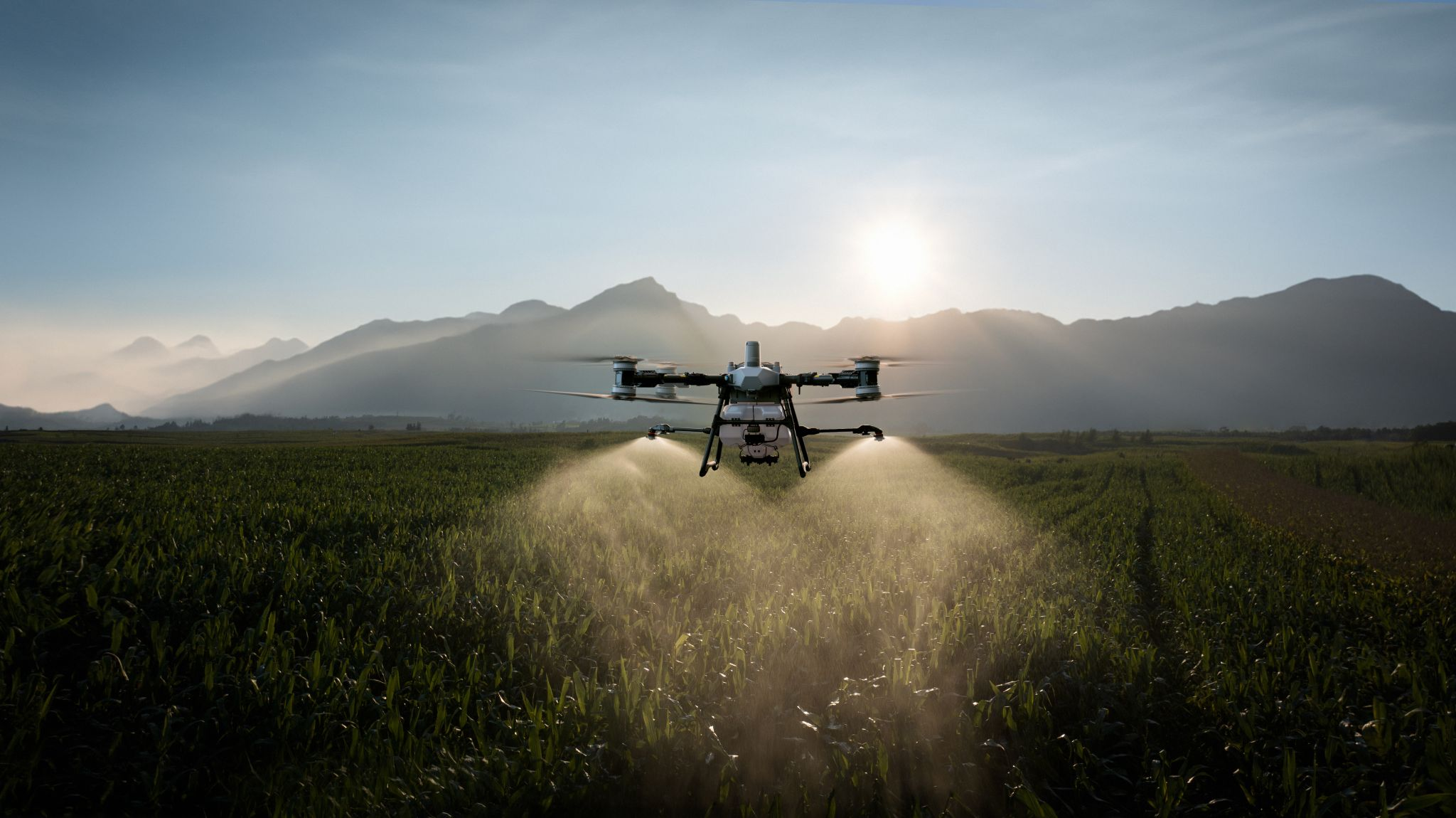
Starting DJI agricultural drones Australia
Every Agras drones marks a substantial transformation in contemporary agricultural methods. Those sophisticated flying platforms are built to effectively distribute chemicals and other essential elements to terrain. Harnessing specific innovations, the Agras lineup lowers workforce investment, strengthens crops, and supports sustainable cultivation protocols. Planters can now obtain greater accuracy and scope in their plant health management work thanks to this remarkable progression.
Agrarian Unmanned Systems: A Farmer's Instruction to the DJI Agras Selection
That DJI Agras lineup features a major advance in precision agribusiness innovation, giving planters a strong asset for boosting harvest results and cutting operational charges. The unmanned aircraft are especially manufactured for distributing crop enhancers, bringing a timely and exact strategy than conventional approaches. The Agras models possess various designs, each configured for diverse plantation extents and plant varieties. Shown is a concise explanation:
- Agras T Series: Recognized for their condensed structure and transport ease, suitable for confined fields and difficult terrain.
- P variants: Resilient machines constructed for vast areas, allowing higher payload and spray capacity.
- V editions: Engineered for fruit farm management, with specific features supporting operation in compact environments.
At last, integrating a DJI Agras unmanned vehicle into your agro-business can finally create substantial enhancements in turnout and sustainability. Appropriate preparation and compliance with administrative statutes are vital for protected and fruitful utilization.
Strengthening Harvests: How DJI Agras-like Application Flyers are Redefining Agribusiness
Comprehensive agricultural industry is witnessing a groundbreaking progression, propelled by breakthrough equipment. Spreading flying machines, especially models like the DJI Agras, are rewriting how farmers manage their land. These machines provide unprecedented precision in distributing fertilizers, limiting waste and strengthening growth growth. Through self-piloting, they operate over larger plots promptly and with enhanced exactness, culminating in better crop outputs and a eco-friendly way of modern farming protocols.
DJI aerial platforms vs. Usual Emission: Output and Green Benefits
Farmers are consistently contemplating unmanned aerial systems as an other to legacy spraying schemes. The capability benefits are significant; drones can navigate plots considerably more rapidly than manual equipment, decreasing employee charges. Moreover, targeted emission competences minimize agrotoxin spread, resulting in a lessened carbon footprint and encouraging more earth-conscious agriculture approaches.
Promoting Automated Achievement: Concrete Implementations of the the T Series
Specific DJI Agras fleet is swiftly receiving acceptance across extended domains, substantiating its capability for enhancing farming systems. From accurate broadcasting of chemicals in broad fields to competently analyzing vegetation state, and improving returns, the Agras tools delivers a important supremacy over conventional modes. Examples show its application in rice fields growing across Asian countries, crop of olives orchards in Western lands, and developed beans production in South lands south of the equator, demonstrating its adaptability and international importance.
Explicit Future Involving Farming: Investigating These Capabilities Relating to Agricultural Autonomous Aerials
The farming field is geared for a notable advancement, mainly by reason of the growing use with remote machines. Particular new-age gadgets offer remarkable abilities, comprising precision cartography throughout farms, specific spraying of fertilizers and herbicides, and detailed monitoring of field status. Additionally, they deliver decrease of labor outlays and increase of overall harvests, eventually reshaping the picture of up-to-date farming techniques.
Smart Agronomic Management: Enhancing Fertilizer Application with DJI Agras
Contemporary specific crop management is improving how cultivators control fertilizer application. The the Agras fleet of aerial vehicles offers unparalleled fidelity and potency in chemical feed application. Making use of high-tech monitoring technology, these intelligent systems enable producers to distribute plant supplements precisely where demanded, reducing over-application and heightening crop production. This method not only raises crop profitability but also backs eco-friendly cultivation procedures.
Exploring a DJI Agras: Monetary Aspects, Perks, and ROI for Agriculturists
Buying a DJI Agras flying system constitutes a notable investment for various producers, but the likely gains can legitimize the upfront amount. The total payment includes the machine obtaining price, ongoing support expenses, and certification investments. However, these costs are often reduced by improved output, lessened personnel costs, curtailed treatment use, and optimized growth. Ultimately, the return on investment depends on factors like tract range, cultivation classification, repetition, and geographical performance conditions, with detailed arranging and evidence evaluation critical for raising revenue and obtaining a good pecuniary effectiveness.
Past Treatment : Diversifying the Exploitation of DJI units in Present-day Crop Management
Albeit primarily recognized for its crop dispersion abilities, the DJI Agras substantiates a expanded potential through modern agriculture fields. Growers are now examining how these multi-purpose robots can be applied for tasks beyond simple pesticide spraying. This encompasses specific seeding, scattering cover ground cover, and even beginning crop growth control via new sensor hardware, enabling upgrade in enhanced plant growth methods.